

Sub-3-hr Marathon + 1,000lb Club in the Same Day
What Actually Worked
A few years ago, I was told that the interference effect between strength and endurance was a myth. Basically, you could improve strength and endurance at the same time.
At 25, fresh out of PT school, I was convinced that was wrong. I had read the Brad Schoenfeld research and listened to Mike Israetel talk about interference effects. I thought I understood the tradeoffs. Concurrent training sounded like a compromise at best. Nonetheless, I thought I’d experiment with the training.
After training for a few months, I realized I might have been too certain. Hybrid training was not magic programming. It was fatigue management, autoregulation, and patience. That shifted how I saw training.
Eventually, I wanted to test it. My goal was simple: run a sub-3-hour marathon and total 1000 pounds on squat, bench, and deadlift on the same day.
There was no secret blueprint. I did not follow a perfectly optimized hybrid template. I just applied a few principles consistently and tried not to sabotage myself.
I finished the marathon in 2:58:07. Three hours later, I squatted 315, bench pressed 285, and deadlifted 405 for a 1005-pound total. It was not world-class. It was just a personal experiment that worked. Here is what mattered most.
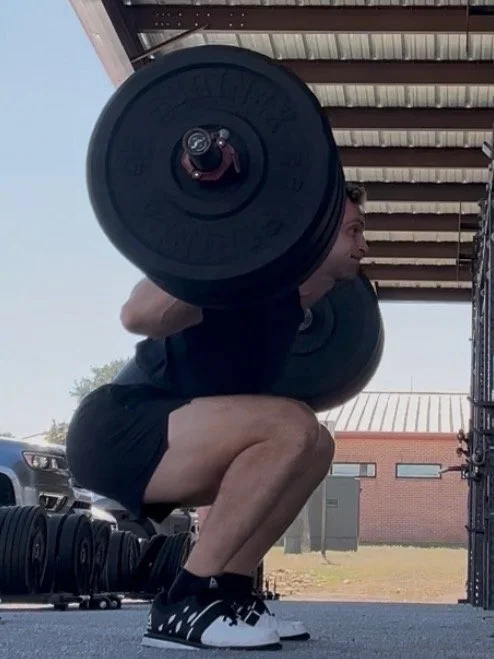
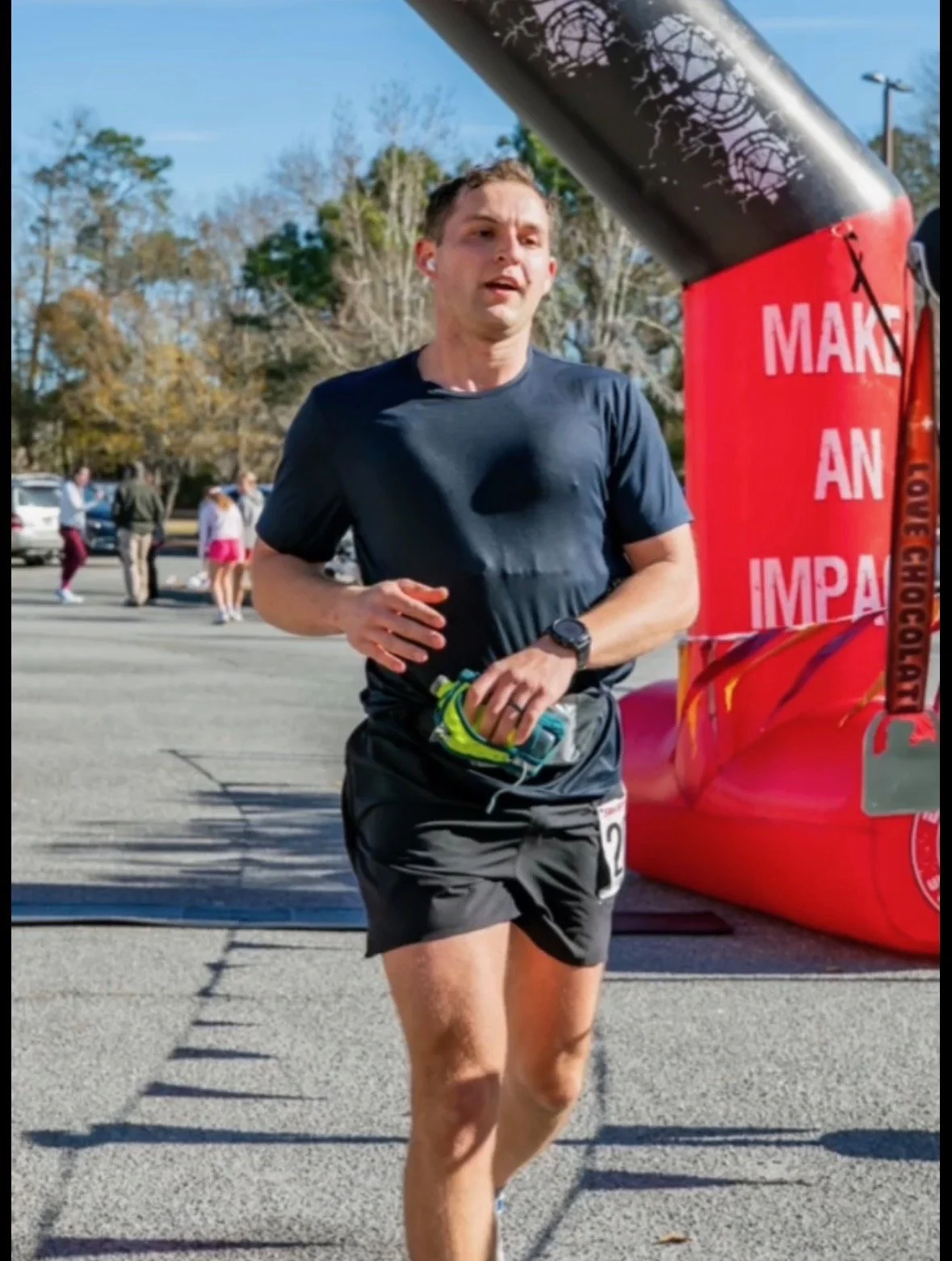
1) Max Effort is Rarely Required
Very little of my training was at 10 out of 10 intensity.
For strength work, I usually only performed one or two true working sets. Most of those lived around RPE 7. The first sets were progressive warm-ups that helped me gauge the day. I was trying to stimulate adaptation without burying myself.
For running, I always had the same goal: finish, knowing I could have done one or two more reps at the same pace. If I was wrecked, I went too hard.
When you are asking your body to adapt in two domains, you cannot afford ego-driven sessions.
2) Maintain Strengths, Build Weaknesses
Before starting the three-month block, I already had the strength to total 1000 pounds. That changed the plan. My barbell work was about maintenance, not chasing new PRs.
Running was the limiter. I did not yet have the aerobic base to hold a 6:51 pace for 26.2 miles. So most of the training time went there.
Two staples:
Marathon pace work: for example, 2 by 3 miles at goal pace, eventually progressing toward 90 minutes of total work at or near marathon pace.
Long runs: fully aerobic, building up to 20 miles two weeks before race day.
If strength had been the weak point, I would have structured the block differently. The goal dictates the emphasis.
3) Volume over Speed
For years, I chased speed too early and stalled. At the beginning of the 3-month train up, I had a simple focus: 8-hours per week of time on my feet (run, ruck, incline treadmill walk) that turns into 8 hours total per week of running. I did not start training at any speed until 2 months before race day, simply because building capacity first made the faster work sustainable instead of destructive.
4) Rest is a Skill
This was by far the hardest lesson for me. For 15 years of training, I would always push through. On week 8 of training, I got sick and barely trained. I sat antsy every day waiting to feel better, but I knew that if I pushed through, I’d just dig a deeper hole.
To reach the goal, one week of missed training would not ruin me; however, several weeks of severely fatigued training certainly could.
In addition, there were some “easy run days” that had 60 minutes of running. In order to take it easy, I would usually do one of these:
HR-based training: stay under 140 bpm. On high-fatigue days, my pace would drastically slow.
Run with a buddy: makes the easy run more enjoyable. We would usually hit a trail or a non-routine route to enjoy it even more.
This challenge did not prove that everyone should train this way. It just showed me that concurrent progress is possible when fatigue is managed, and ego is kept in check.
A lot of what worked here came from Drew’s approach to hybrid training. He offers both individualized programming and daily hybrid programming through Long and Strong for athletes pursuing this exact combination of goals. If this article resonated with you and you want direction, that is a solid place to look.
