

Mission Focused Programming: Part 1
Building Tactical Lethality to Ensure Soldiers Return — Physically and Emotionally — from Combat
This is a guest blog post submitted by a member of Leg Tuck Nation. The content represents their own views and opinions, with edits made only for grammar, clarity, etc. If you are interested in submitting your own content for consideration, click here.
Implementation of H2F brought an era of fitness within infantry brigades that is unrecognizable to the push-up, sit-up, run-every-day Infantry of yesteryear. H2F provides Soldiers with routine access to high quality care across numerous disciplines that cover physical, mental, and emotional fitness. With access to H2F’s support, units are now able to safely and productively experiment with new concepts for training Soldiers for “Soldier Fitness.” A novel concept of “Mission-Focused Programming” (MFP) emerged as my framework for how an Arctic Infantry battalion can achieve the overarching holistic fitness goal of Move Long Distances, Under Heavy Physical and Emotional Loads, in Harsh Conditions.
What most of the military calls “PT” is little more than a cultural activity completed at 0630 every morning. Most conversations about PT include discussions about uniforms, reflective belts, drill and ceremony for Basic Leader Course, “Run-Day Monday,” “Friday rucks,” and countless of other ideas about Soldier standards at PT formation and the things that units do at each PT session just to be able to say they “did PT.” Leadership throughout the Army cannot discuss PT in terms of deliberate progression, measurable outcomes, leader training and certifications, training plan validation, periodization across dimensions of holistic fitness, or fitness in terms of lethality or mission. Simply, no one knows how to connect fitness to mission requirements.
While “PT” is a military cultural phenomenon that fosters activity without intention, the underlying premise of MFP is that Soldier Fitness is an outcome of deliberate training. That is, units executing MFP train to achieve Soldier Fitness. They do not “do PT.” I define Soldier Fitness as move long distances under heavy load (mental and physical) in harsh conditions to close with, and destroy, the enemy. Combat is the most intense human experience for reasons that extend beyond the scope of this paper. However, key aspects include the physical burden of the Soldier’s Load; the cognitive burden of rapid decision-making in constantly changing and uncertain environments; the physiological burdens of fight-flight-freeze; the psychological burden of violence; the emotional burden of loss; the multidomain fitness required to effectively employ weapon systems; and the overall burden of continuous operations and repeated battles.
Soldiers are required to move long distances not only in a literal sense, but also in a temporal sense. Operations might go for days, weeks, or months. The Soldier’s Load is a well-documented physiological and emotional burden. Many think of rucksacks, but research indicates the drivers of combat stress, PTS, and PTSD cause Soldiers and leaders to walk with progressively more slumped postures, to spend an increasing amount of time looking down at the ground, and to more frequently “escape” in mental drifting. Soldiers’ conditions are often brutal and are well-documented throughout history. Austerity ranges across hunger, thirst, cold, heat, disease, fatigue, pain, and worse. At a certain point into the depths of austerity, survival becomes a three-way battle: friendly, enemy, environment. All three elements can cause human failure.
Finally, the action predetermined by the mission of the Infantry is to close with the enemy and destroy them by means of fire and maneuver. Said more starkly: the winner of combat is the one who kills first and survives longest. Soldiers and squads at the absolute limit of the tactical edge win in large-scale, high-intensity combat by killing more from the opposing force than the opposing force kills from their own, while maneuvering at a faster comparative rate. The fitness required for such prolonged violence is difficult to achieve in a gym or to validate with a fitness assessment.
Achieving Soldier Fitness is institutionally complicated. Soldiers and units will always train to the test. But the concept of Soldier Fitness is to prepare Soldiers mentally and physically for combat, not the Army Fitness Test (AFT). Typifying the cultural conflict between tactical and physical readiness, a recent argument holds that fitness levels drop during field training because units don’t execute fitness training in the field. But that misses the point. If fitness training is inherently mission-focused, then fitness levels should be sustained or even improve while executing tactical training. Conversations of “PT” for AFT scores and “Soldier Fitness” for combat preparedness disconnects the physical domain from Infantry mission requirements as well as all other domains of H2F.
Meanwhile, the Army’s training and fitness regulations do not provide a structured way to crosswalk Soldier Fitness requirements with Soldier mission requirements. This gap allows units to do “PT” that drives toward AFT scores or physical “maintenance” rather than tactical effectiveness (lethality). If we are disappointed in how Soldiers train and the fitness results that follow, the Army must re-evaluate the expected outcomes of both regulatory fitness requirements and leader development.
For example, Basic Leader Course (BLC) evaluates Specialists, Corporals, and Sergeants on their abilities to lead Physical Readiness Training (PRT) drills in accordance with ATP 7-22.02: Health and Holistic Fitness Drills and Exercises that are largely contradictory to the dynamic and purposeful fitness training H2F is fighting to develop within tactical units. PRT Drills, the performative routines that focus on drill and ceremony and formulaic actions, consume the first five pages of this publication. That the very first sentence and the first five pages of the Army’s ATP for PRT drills and exercises prioritize highlighting drill and ceremony in fitness training is evidence enough of the Army’s disconnect between the fitness it demands and the fitness it demonstrates. PRT Drills cause units to spend Soldier Fitness time training their future leaders to pass a requirement of BLC that no professional trainer, sports team, or athlete would ever imagine, let alone utilize.
Another fallacy of “PT” is the idea that exercise-related injuries are a moral failing. A pending research publication makes the central argument that physical training independently causes 36% of musculoskeletal injuries in the military. Research methodology limitations aside, this language implies recklessness, ineptness, or intentional causality on behalf of those directing physical fitness activities. However, as Dr. Ellie Van Luit astutely notes in the comments of the post announcing the forthcoming research, under-stressing (not hardening) and underpreparing Soldiers as well as under-reporting injuries all create new forms of risk for commanders.
Risk-averse physical training that results in zero (or zero reported) injuries is a failure to protect Soldiers and units in the long-term to benefit a perception of “good” fitness in the short term. Another unproductive, if not harmful, narrative is that “unit PT is for physical maintenance, not improvement.” The moral failing in these perspectives is that commanders aligned to these perspectives underprepare Soldiers for the impacts and long-term consequences of combat, both physical and emotional. Coddling, rather than hardening, Soldiers during train-up incurs insurmountable costs that affect lives in the near term and for lifetimes. Failing to identify a physical weak point during training creates real risks in combat. Failure to prepare for combat creates reals risks of physical and emotional injuries that can last lifetimes. There is no hiding from risk, and there is no room for mere maintenance when there are gains to be made. Soldiers’ lives are at stake.
Soldiers are commonly injured during all military training, because military service is inherently dangerous. The military works with massive machinery, carries heavy things, and routinely trains in explosives and projectiles in austere environments while being task-saturated, short on time, and under constant evaluation. Soldier Fitness protects Soldiers and the unit in combat. Soldiers too weak to manage the rigors of physical and tactical training are an absolute burden and risk to the unit in combat. The dark reality is that Soldiers being injured during training could save them from being casualties managed by their platoon in combat. This is the sharp point of Soldier Fitness: to prepare Soldiers for combat.
Special thanks to the 1-5 Infantry Battalion Strength and Conditioning Coach and the 1/11 MBCT (Arctic) H2F Program Director for the hundreds of hours I took from you to build these thoughts and to train for Soldier Fitness.
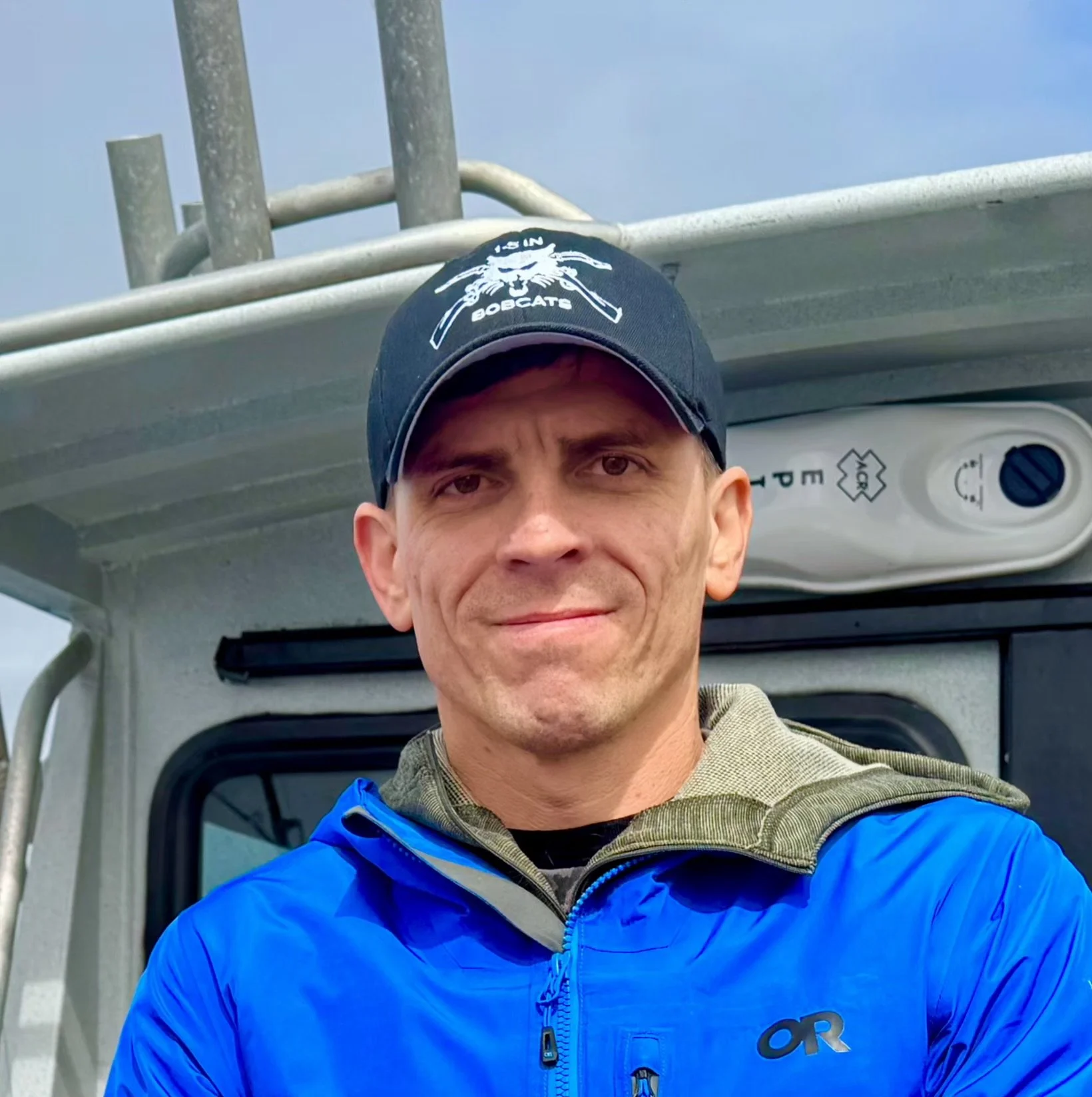
Joseph Williams is a U.S. Army Infantry Officer in command of 1st Battalion, 5th Infantry Battalion within the 11th Airborne Division (Arctic) at Fort Wainwright, Alaska. Ranger, Airborne, Pathfinder, and Basic Mountaineering qualified, he has served in multiple combat formations, as military advisor to an Afghan Army infantry battalion, in staff positions from battalion to CJFLCC and Army G3, and with the U.S. Department of State. He holds an MPA in Policy Analysis and Analytics from Norwich University and formerly instructed at the U.S. Marines Corps Expeditionary Warfare School. He is an avid adventurist with a background in ultra-endurance recreation and a love for snow.