

The Art of Training
A Case for Training as a Practice in the Pursuit of Physical Literacy
When I sat down to write The Death of Periodization, I never intended for it to become part of a series. That said, given the discourse and debate the article created, I feel it’s only fair to offer a deeper look at my own perspective on how we might think about training separate from traditional Periodization doctrine.
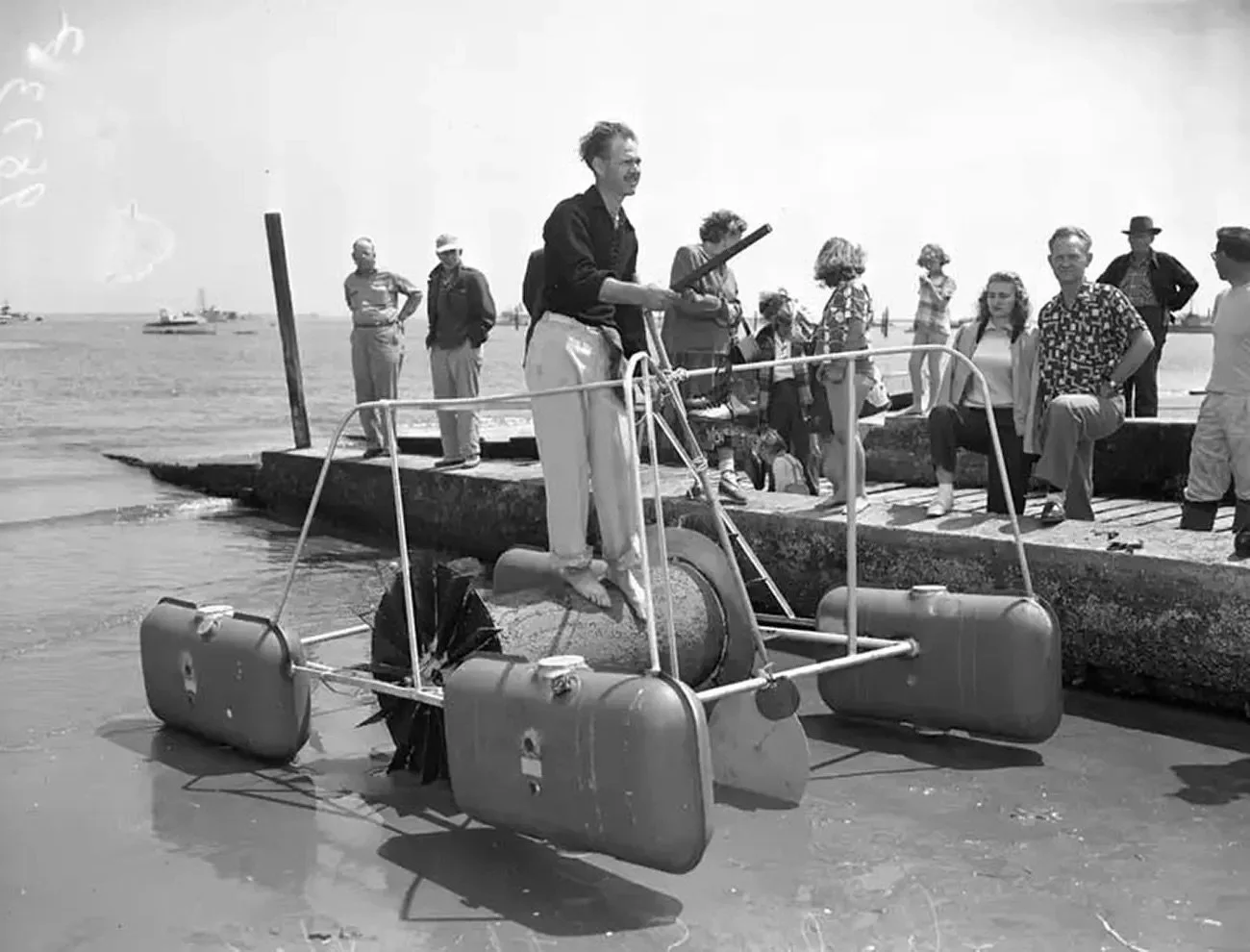
The Nautical Treadmill…physical literacy at it’s absolute peak!
I make no qualms about the fact that I’m a huge fan of yoga. What I find most interesting of late is the fact that, in yoga, the pursuit of improvement is referred to as practice. For example, each time I go to complete a yoga session, I’m “working on my practice,” as though there is an ever-expanding “bank account of betterment” that I continuously contribute to so long as I stay consistent with my yoga work.
Most folks will probably be more familiar with this in the medical world, where doctors also refer to what they do as practice. Why is that? A quick Google returns the following explanation:
“Doctors ‘practice’ medicine because it is a profession that requires continuous learning, skill refinement, and applied experience rather than a one-time mastery.”
Honestly, that’s pretty legit. And it has me thinking…
Why don’t we think of training this way?
The False Assumption
At risk of repeating myself from the Periodization article, I’m going to dip my toe into this rabbit hole again.
Most athletes approach training like a recipe.
Whether they realize it or not, they believe that there is a perfect plan, that every workout has a “right” answer, that deviation from that answer equates to failure, and that consistency really just means repetition.
The problem with this perspective is that it creates fragility, and fragility in training is the death of progress. Miss a workout? The plan is broken. Go on vacation? The plan is broken. Crowded gym? The plan is broken.
When this happens, athletes tend to conclude that they lack discipline (and shitty coaches reinforce this assumption). Realistically, though, they’re just trying to navigate a training system that doesn’t make any room whatsoever for real life.
Practice Instead of Performance
Doctors, yogis, musicians, artists, writers…one thing they all have in common is that their “practice” has no endpoint.
You simply…return to it.
If you think about it, we could view training in much the same way. An athlete is practicing moving well, expressing strength, enduring discomfort, solving movement problems, and understanding their own body in time and space.
On some days, that practice might look like heavy squats. On other days, it might be carrying rocks. Hell, it might even include climbing a tree with your kid or finally trying to learn how to do a handstand.
When we widen our aperture, all of these pursuits become legitimate contributors to your practice.
Imagine, if you will, an athlete who has spent 20+ years trying things. They might have learned Olympic lifting, trail running, rowing, kettlebells, yoga, jiu-jitsu, swimming, rock climbing…the list goes on.
This person isn’t just fit; they’re physically literate. Physical literacy describes a body that has accumulated experiences as opposed to just workouts. Picture the physically literate athlete and contrast that with someone who has run the same bodybuilding split for fifteen years and constantly complains about all the aches and pains they experience even after their 45-minute warm-up routine.
Hell…I might go so far as to say that physical literacy and accumulated experiences are what actually hold the key to longevity…not some snake-oil supplement cocktail gulped down in front of a bed of red lights while sitting in a cold tub sun tanning your…you know what…
Finite Versus Infinite Games
There’s a philosophical concept around Game Theory. It was first brought to light in the 1980’s by NYU professor William Zartman and popularized more recently in 2013 by James Carse in his book about Finite and Infinite Games.
The overarching theme is this: finite games are played for the purpose of winning. Infinite games are played for the purpose of continuing the play.
My argument is that we should view training less as a finite game and more like an infinite game.
Let’s discuss.
Finite games have clear rules, defined endpoints, and obvious winners and losers. A finite approach to training focuses on completing the next program, hitting the next PR, or passing the next fitness test. From this standpoint, training becomes a series of stop-start “quests” to try and achieve something for the sake of achieving something. As mentioned earlier, this approach could be considered quite…fragile.
An infinite mindset, on the other hand, views fitness as a lifelong practice. Training becomes an ongoing process of learning, adapting, exploring, and refining. Interestingly, when you operate with this perspective, the goal is to never actually finish training…the goal is to become the kind of person who never stops.
The Finite Athlete (if we want to call them that) says, “I completed Week 7 of my program.”
The Infinite Athlete (sounds like a superhero) says, “I’ve been refining my movement practice for 20 years.
The Finite Athlete asks, “What program should I buy next?”
The Infinite Athlete asks, “What interesting thing can I learn this month?”
Creativity as a Training Variable
That subheading alone should make you pause and reflect. Creativity can be a training variable??
Certainly!
As coaches, we tend to obsess over variables like sets, reps, intensity, volume, rest, etc. Hell, entire books have been written about work:rest ratios.
Rarely, if ever, do we discuss novelty.
Yet, novelty increases attention, increases enjoyment, develops coordination, exposes weaknesses, creates resilience…basically fosters that thing we mentioned earlier - Physical Literacy.
Think about it for a second. Kids don’t become athletic because we periodize recess. They become athletic because they spend thousands of hours experimenting and playing.
So how do we create novelty in training?
Use constraints, not instructions.
An incredibly loose example of this might be something like:
Spend 45 minutes moving
Touch all five (or six, or seven…) movement patterns across a week
Carry something awkward/heavy/etc
Get your heart rate above XYZ at least three times
Within these constraints, the athlete gets to create, and I guarantee that once you allow your athlete to create, you’ll build compliance for life.
The Danger of Optimization
Please hear me: there is a time and a place for optimization. When the performance parameters are clearly defined, the timelines are known in advance, and the bar to success is quite high…optimize your little heart out.
But understand that optimization often kills curiosity.
We see this a lot with wearables, apps that track training, data management systems, etc.
All of a sudden, athletes become afraid to go on a hike because heaven forbid it exceeds Zone 2, or they skip the opportunity to learn how to rock climb because it might conflict with their hypertrophy training.
When we take this thought experiment to its logical conclusion…which a lot of coaches do…we end up with athletes that aren’t athletes anymore. They’re program followers.
A Way Forward
Programs aren’t bad, and they very much have a place. However, proper programming should support a lifelong training practice, not replace it.
The goal of training at any one point in time should not be to simply complete a program. The goal should be to leverage training in such a way that you become the kind of person who wakes up fifty years from now still wondering “how should I move today?”
That’s not a training plan; that’s a practice.
And remember…practice makes perfect.