

The Death of Periodization
Shifting from Forecasting to Navigation
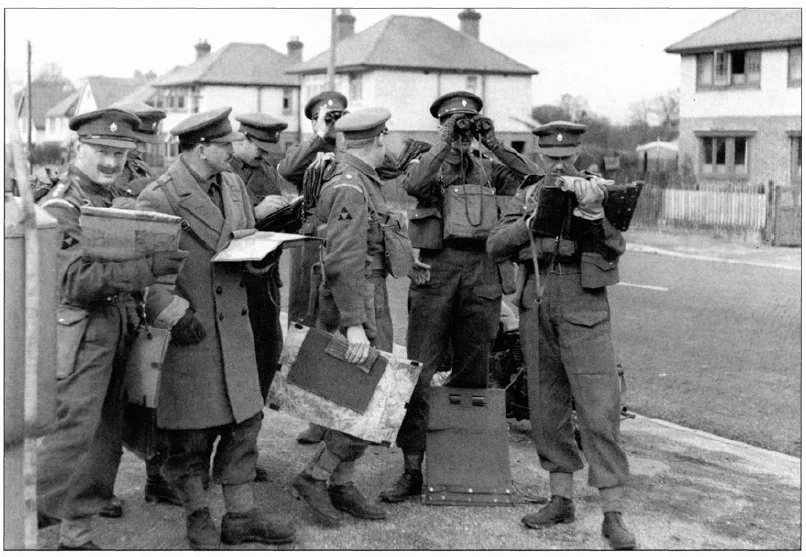
Early tactical strength and conditioning coaches Periodizing their training plans
I want to have a discussion with you about Periodization.
Now, I don’t mean to dismantle the idea of periodized training adaptation within the broader world of sport science. Instead, what I want to break apart today is the myth within tactical human performance that we should adhere to training models that simply don’t work in our world.
Let’s Get One Thing Straight…
Before we begin, let’s get one thing absolutely straight:
Periodization and Planning Are Not the Same Thing
If you can’t get past that reality, this article, and perhaps this profession, really isn’t for you.
Assuming you’re still reading, let’s start where we so often do by defining two key terms:
Planning: an adaptive decision-making process
Periodization: a prediction model
When we PLAN something, we answer simple questions. What qualities matter? Which of those qualities need attention? What resources do I have at my disposal? What constraints exist? What happens if today’s plan changes?
Crucially, Planning is flexible; it updates, incorporates new information, and assumes uncertainty.
Periodization, on the other hand, is something much more specific. The fundamental assumption of Periodization is this: If we manipulate training variables in predetermined ways over predetermined periods, predictable biological adaptations will occur on a predictable schedule. This is a fundamentally different claim.
Stop Sucking Your Thumb and Listen to Me
I want to confront this head-on, because more so than perhaps anything else in the entire world of strength and conditioning, Periodization is the proverbial blankie/pacifier/teddy bear of coaches everywhere. Listen to me very clearly…
When we criticize Periodization, we aren’t criticizing macrocycles and mesocycles. We’re criticizing PREDICTABILITY.
Keep your cycles. Keep your phases (hell, I use phases all the time). Keep all the terms you need to keep in order to help you sleep at night. But understand that the original theory of Periodization assumes that we can forecast adaptations far into the future, while modern biology suggests more and more that adaptation is emergent, nonlinear, and highly individual.
Modern biology suggests it, but the realities of tactical human performance demand it. The more chaotic the environment, the more planning you need…but the less you can rely on Periodization.
Why This Matters for Tactical Populations
Athletes compete. Soldiers/Airmen/Marines/etc. do not. Athletes know national championships, Olympics, state finals, and so on. Military personnel know…maybe a deployment? Maybe? Maybe JRTC? Hurricane relief? A staff assignment? But also maybe nothing. The competition calendar for a tactical athlete is entirely fictional, and within that fiction MUST exist a toolset that allows us to navigate the uncertainty.
If Periodization is fundamentally a way of peaking for known future events, tactical populations immediately violate one of its foundational assumptions. Weigh that reality in your mind and then hop on Instagram to try and argue with me why it makes sense to give a tactical athlete a 12-week peaking cycle…
Oh Yeah, and Another Thing
Athletes train around competitions, while warfighters (I hate that word, but it works) train inside operations. With that being the case, training is no longer the primary stressor. Training is competing with:
sleep deprivation
travel
family stress
shift work
schools
ranges
administrative chaos
caloric deficits
etc
Now, to be clear, some of these variables can and do exist in the athletic space; however, given the rigidity of a sporting competition schedule, there is far more control and far less need to accommodate unpredictability on a given day. The aforementioned stressors, when laid over top of a chaotic military training calendar, don’t politely wait until your Periodized deload week.
From Forecasting to Navigation
And so, with our argument laid out, we arrive at our dénouement.
Periodization says “here is where you’ll be in twelve weeks.”
Planning says “here is where we’re trying to go; let’s see where we are today.”
Think about this from the perspective of Google Maps. If Google Maps were periodized, it would tell you exactly how to get to your destination (great!), but heaven forbid you took a wrong turn or detour because Periodized Google Maps wouldn’t be able to account for deviation (not great!). Google Maps: Planning Edition, on the other hand, reroutes every time there’s a traffic jam.
No one complains that Google Maps isn’t following its original plan. Why?
BECAUSE THE OBJECTIVE WASN’T TO FOLLOW THE PLAN. THE OBJECTIVE WAS TO ARRIVE AT THE DESTINATION!!!!
I swear, this is my chief issue with strength coaches everywhere. Sometimes it feels like 99% of coaches are more concerned with following a program than actually arriving at the right destination.
A Solution
Having now successfully broken down Periodization, let’s propose a possible model from which we can work.
Instead of:
Macrocycle → Mesocycle → Microcycle
Planning should perhaps look more like:
Mission → Capabilities → Current State → Today’s Decision
Every training day starts with “given today’s readiness, what is the highest-value training decision we can make?” Not “what week of the spreadsheet are we on?” Periodization optimizes the schedule, whereas Planning optimizes the athlete. One is calendar-centric, while the other is human-centric.
Whether you realize it or not, Periodization operates under the assumption that:
Training → Adaptation
But we have to accept that reality looks more like:
Training → Sleep → Nutrition → Relationships → Workload → Motivation → Genetics → Recovery → Random Life Events →Adaptation
As professionals, let’s stop fooling ourselves. Biological systems are complex systems, not linear machines responding only to mechanical load. Stress responses emerge from the interaction of physiological, psychological, and environmental factors rather than from training load alone.
Rather than Periodizing, we should be planning, monitoring, adjusting, autoregulating, reallocating emphasis, and preserving flexibility and choice.
The purpose of Planning is not to predict the future. The purpose of Planning is to make better decisions as the future unfolds.
Wrapping it Up
Sport has one objective function: win. Tactical organizations have multiple competing objectives all simultaneously demanding our attention: remain deployable, improve fitness, reduce injury, maintain technical proficiency, sustain family readiness, attend mandatory schools, support operational taskings, accommodate personnel turnover, etc.
Recognizing this distinct difference means recognizing that the optimization problem is fundamentally different. You’re not trying to maximize one performance peak; you’re constantly balancing competing demands while avoiding degradation in any critical capability. A planning framework that continually reallocates emphasis based on readiness and mission constraints is therefore a better fit than one that presumes stable conditions and a fixed competition calendar.
Hear me, please…
I’m not asking you to abandon structure. I’m asking you to level up and ask yourself, “What kind of structure actually survives contact with reality?”
That’s not arguing about Periodization on LinkedIn or Instagram…
…that’s Coaching.