

Mission Focused Programming: Part 2
Building Tactical Lethality to Ensure Soldiers Return — Physically and Emotionally — from Combat
This is a guest blog post submitted by a member of Leg Tuck Nation. The content represents their own views and opinions, with edits made only for grammar, clarity, etc. If you are interested in submitting your own content for consideration, click here.
This is the second part of a two-part series. For Part 1, click here
All said, most unit leaders do not have the experience or expertise to plan MFP to achieve Soldier Fitness. MFP, a substantially higher demand than “PT,” maximizes Holistic Health and Fitness (H2F) resources and minimizes unit burdens by narrowing the focus of fitness training periods to upcoming mission tasks. MFP periods could range from 4 to 16 weeks and are determined solely through analysis of units’ training progressions and upcoming mission requirements. The overarching programming modes are limited to: muscular power, muscular endurance, VO2 max, aerobic endurance, stamina (endurance with load over time), and mobility/recovery. Some examples might include muscular endurance and aerobic endurance training for platoon live fires, muscular power and VO2 max training for EIB or dismounted mortar employment, mobility/recovery training for armed guard duty, or muscular endurance and stamina for extended training in high-altitude or mountainous terrain.
MFP is successful if Soldier Fitness is sustained through training cycles. The Soldiers’ Fitness should match the Soldiers’ Mission. Unit leaders should account for their environment as well. During the intense cold and dark of Alaskan Interior winters, for example, MFP should include opportunities to train fieldcraft, toughness, cold awareness, and cold acclimation to account for the particular needs of fighting and training in the Arctic. In preparation for training in extreme heat, MFP should include controlled strategies for heat and humidity adaptation as well as repeated efforts approaching VO2 max.
Because MFP is mission-focused, Soldier Fitness training should have oversight at the company-level and be executed at the platoon-level to ensure mission and training schedule integration, progress evaluation, leader development and certification, and ability group fitness sessions that are not possible at the squad-level. However, to manage resources and ensure Soldier Fitness training is resourced and protected, company commanders are responsible for synchronizing resources for the platoons. In other words, commanders lead company fitness plans that are executed at platoon level to mitigate resource limitations and task saturation. Fitness plans should be developed by H2F-trained unit personnel (‘next-generation’ Master Fitness Trainers) and reviewed by battalions’ H2F-assigned strength and conditioning coaches. H2F strength and conditioning coaches should advise on resource management, periodization, programming, and timing of training to maximize energy levels and access to nutrition.
The research consistently shows that consistency supersedes all other factors in fitness training. Because MFP is a function of training, not just “a thing we do at 0630,” MFP plans should be posted with and integrated into company training schedules. This allows units to intentionally offset (from 0630) Soldier Fitness training to synchronize it with unit training requirements and tasks. This method protects fitness training, which too often is “the first to go.” Further still, integrating Soldier fitness as a function of training rather than just a 0630 activity allows commanders to protect meal times, support circadian rhythms by seeing the sun during fitness training (in high latitude locations), and physically train Soldiers at more physiologically and emotionally optimal times of the day. These aren’t just scheduling nuances — they’re leader issues. These elements train leaders to thrive in a mission command environment rather than simply comply with a “salute the Flag” requirement.
The following guidance can be used as a template for developing and approving company MFP plans:
Company commanders approve MFP plans with H2F-certified unit leaders
H2F strength and conditioning coaches approve Soldier Fitness plans from a science- and outcomes-based perspective
Company MFP plans synchronize resources and set outcomes for platoon-led, executed, and resourced Soldier Fitness training
Develop platoon-internal ability groups when feasible to ensure all fitness levels are challenged
One team-building event/month to promote low-stakes competition and winning spirit
H2F Strength and Conditioning coach evaluates each platoon at least once per month to adjust programming and mentor unit leaders as necessary regarding adherence to the plan, coaching effectiveness, and engagement of all fitness levels
Set weekly structure to drive consistency
Five-day week:
Traditional “zone 2” cardio (run, snowshoe, ski)
Full-body strength (mid- to high rep)
Work capacity (“zone 3-4,” 25-40 minutes, steady, weighted activity, intervals, repeats)
Active recovery (Bike, swim, row, elliptical, yoga, pilates, body-weight, calisthenics, bands, mobility)
Weighted cardio (ruck or kit, not both, no weighted running)
Four-day week: remove weighted cardio
Three-day week: remove weighted cardio and recovery
This structure holds leaders accountable beyond their comfort zones and pushes them to seek out development from their H2F coaches for new skills and expanded capacity to lead and perform Soldier Fitness.
Soldier Fitness, achieved through Mission Focused Programming, is a new conceptualization of an enduring requirement for military forces. If the Army continues to simply shift from draft-era fitness concepts, it will never increase the lethality of its units. Wars demonstrate that Soldiers will always need to move long distances under heavy physical and emotional loads in harsh conditions to employ weapons with lethality while moving to, through, and back from successive tactical objectives.
Sweat is dripping in their eyes, backs cramping, heart rate preventing focus, adrenaline causing hands to shake, heavy breathing interrupting a sight-picture, heat causing pressure, altitude burning your lungs… Once in contact, you have the fitness you have, and no one in the world cares about your AFT score. We must do better. We must get Mission-Focused to develop Soldier Fitness that builds lethality and protects Soldiers, physically and emotionally. Soldier Fitness is more than passing or failing a “PT” test; it’s the difference between winning or failing in combat.
Special thanks to the 1-5 Infantry Battalion Strength and Conditioning Coach and the 1/11 MBCT (Arctic) H2F Program Director for the hundreds of hours I took from you to build these thoughts and to train for Soldier Fitness.
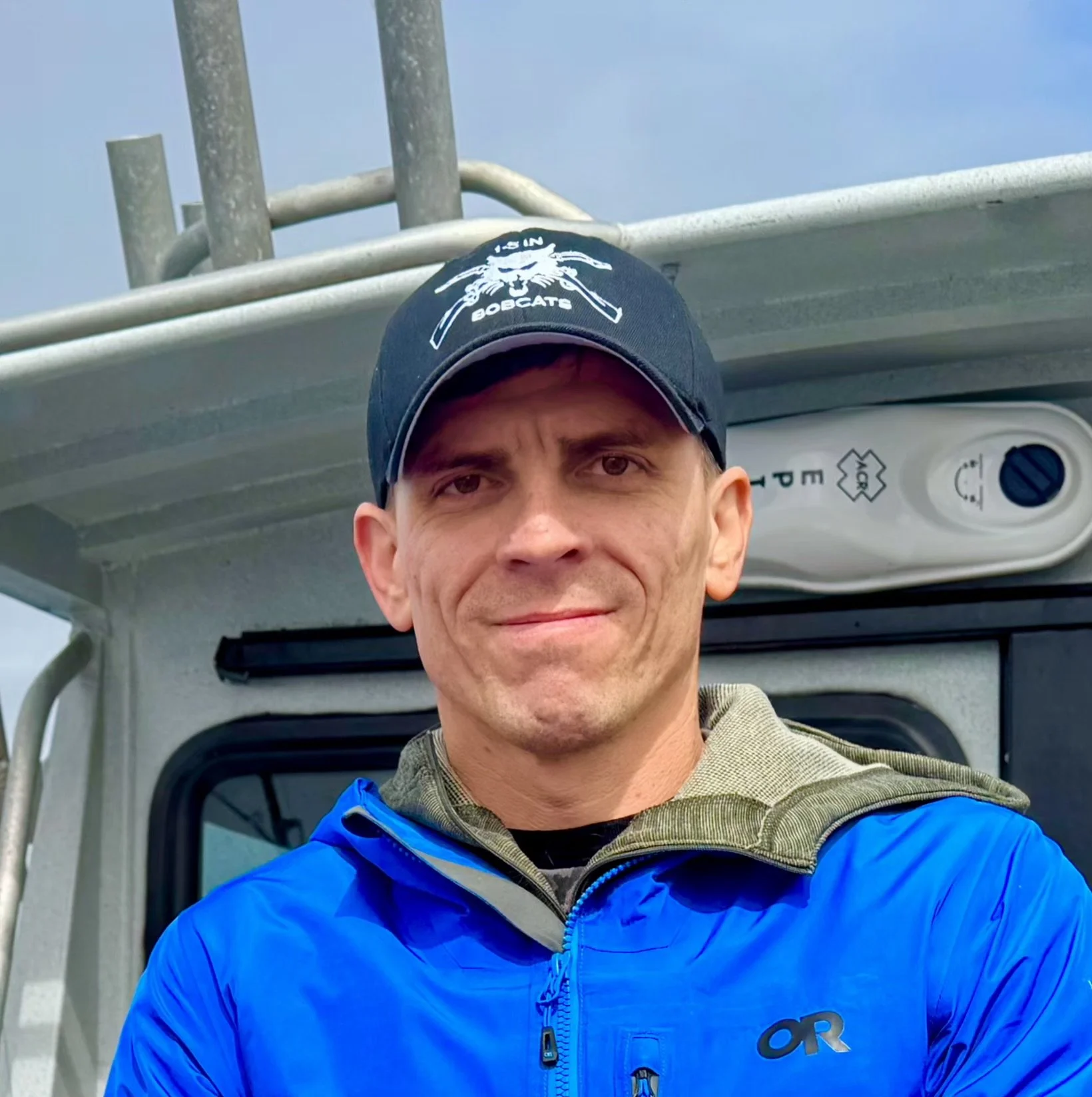
Joseph Williams is a U.S. Army Infantry Officer in command of 1st Battalion, 5th Infantry Battalion within the 11th Airborne Division (Arctic) at Fort Wainwright, Alaska. Ranger, Airborne, Pathfinder, and Basic Mountaineering qualified, he has served in multiple combat formations, as military advisor to an Afghan Army infantry battalion, in staff positions from battalion to CJFLCC and Army G3, and with the U.S. Department of State. He holds an MPA in Policy Analysis and Analytics from Norwich University and formerly instructed at the U.S. Marines Corps Expeditionary Warfare School. He is an avid adventurist with a background in ultra-endurance recreation and a love for snow.